






Decentralized, small size solar central for rural electrification
Business Model Description
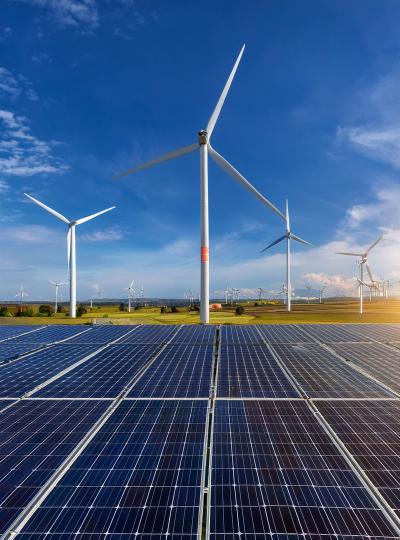
Invest in the installation and maintenance services of decentralized small-solar plant to provide electricity to underserved rural areas not connected to the grid. Solutions can be small or micro solar centrals ranging from 10 kW to 10 MW. Revenues are driven from direct sale to rural communities through lump-sum payment or a pay-as-you-go model to poorer households.
Expected Impact
Investment in decentralized solar solutions improves rural electrification and access to clean energy, reduces reliance of communities on imported fossil fuels or biomass energy, reduces GHG emissions and improved health and economic outcomes.
How is this information gathered?
Investment opportunities with potential to contribute to sustainable development are based on country-level SDG Investor Maps.
Disclaimer
UNDP, the Private Finance for the SDGs, and their affiliates (collectively “UNDP”) do not seek or solicit investment for programmes, projects, or opportunities described on this site (collectively “Programmes”) or any other Programmes, and nothing on this page should constitute a solicitation for investment. The actors listed on this site are not partners of UNDP, and their inclusion should not be construed as an endorsement or recommendation by UNDP for any relationship or investment.
The descriptions on this page are provided for informational purposes only. Only companies and enterprises that appear under the case study tab have been validated and vetted through UNDP programmes such as the Growth Stage Impact Ventures (GSIV), Business Call to Action (BCtA), or through other UN agencies. Even then, under no circumstances should their appearance on this website be construed as an endorsement for any relationship or investment. UNDP assumes no liability for investment losses directly or indirectly resulting from recommendations made, implied, or inferred by its research. Likewise, UNDP assumes no claim to investment gains directly or indirectly resulting from trading profits, investment management, or advisory fees obtained by following investment recommendations made, implied, or inferred by its research.
Investment involves risk, and all investments should be made with the supervision of a professional investment manager or advisor. The materials on the website are not an offer to sell or a solicitation of an offer to buy any investment, security, or commodity, nor shall any security be offered or sold to any person, in any jurisdiction in which such offer would be unlawful under the securities laws of such jurisdiction.
Country & Regions
- Senegal: Dakar
- Senegal: Nord
- Senegal: Centre
- Senegal: Sud
Sector Classification
Renewable Resources and Alternative Energy
Development need
Senegal has achieved a national electricity access rate of 84% in 2023, yet rural electrification lags at 64% and over 30% of rural communities remain off-grid. Despite recent progress in power generation, over 60% of the population continues to rely on unsustainable cooking methods, such as firewood or charcoal causing health risks (1, 2).
Policy priority
The National Development Strategy 2025-2029 aims at achieving universal access to electricity, enhanced energy efficiency and demand management. The Strategie Gas to Power 2018-2025 targets the energy independence and the reduction of energy costs. The Nationally Determined Contribution's objective is to reduce the sector's emission of 35,3% unconditionally by 2030 (3, 4, 5).
Gender inequalities and marginalization issues
Stark disparities remain between electrification of rural and urban areas. Electricity access in urban center is of 97% compared to 64% in rural areas. This rural energy gap disproportionately affects women and youth who leave in majority in rural areas. Women also spend excessive hours on survival tasks such as fetching water or firewood and processing food manually. These unpaid burdens severely limit their time for education, income-generating activities, and childcare (1, 6, 7).
Investment opportunities introduction
Per capita energy consumption in Senegal increased of 301% from 2000 to 2023, reaching 0.417 MWh/capita. Opportunities include scaling renewables, transitioning from HFO to natural gas, grid upgrade, and transport and distribution. With existing reserves, developing the gas value chain is crucial to lowering costs and boosting industrial growth (4, 8, 9).
Key bottlenecks introduction
Despite strong energy potential, Senegal struggles with high electricity costs, sparse rural access, reliance on foreign investments for structuring renewable projects, limited support for local small-scale renewables, and risks from new fossil fuel reserves that might divert attention from renewables development (3, 10).
Alternative Energy
Development need
Senegal remains highly dependent on fossil fuel, making the sector one of the biggest contributor to GHG emissions. Emissions are planned to increase by 22% from 2025 to 2030 following as business as usual scenario. The country needs to harness its solar and wind potential to reach its energy transition and universal electrification target by 2029 (3, 5, 11, 12, 13).
Policy priority
The National Development Strategy 2025-2029 targets a share of renewable of at least 40% by 2029. The Stratégie nationale des combustibles de cuisson propre et des biocarburants 2025-2035 set the pace for a clean cooking transition, through a diversified and accessible clean energy supply (3, 14).
Gender inequalities and marginalization issues
Only a small portion of rural Senegalese households have access to clean cooking fuels (LPG, biogas), leaving rural women particularly burdened with traditional biomass use—which drives health issues, time poverty, and limited economic opportunities. In addition, inequal access to electricity throughout the territory reinforces economical inequalities, with a strong correlation between access to electricity and poverty peaking in rural areas (11, 15).
Investment opportunities introduction
Senegal targets 40% renewables by 2030 and full electrification by 2029, with untapped theoretical solar PV irradiation potential averaging 5,798 kWh/m²/day and offshore wind capacity estimated at 45 GW—13 GW fixed and 32 GW floating (3, 11).
Key bottlenecks introduction
Despite strong solar and wind potential, Senegal faces several renewable-specific challenges such as high financing costs, weak storage capacity, grid congestion, slow regulatory implementation, limited technical competencies, and heavy reliance on imported equipment and materials (3, 16, 17, 18).
Solar Technology and Project Developers
Pipeline Opportunity
Decentralized, small size solar central for rural electrification
Invest in the installation and maintenance services of decentralized small-solar plant to provide electricity to underserved rural areas not connected to the grid. Solutions can be small or micro solar centrals ranging from 10 kW to 10 MW. Revenues are driven from direct sale to rural communities through lump-sum payment or a pay-as-you-go model to poorer households.
Business Case
Market Size and Environment
< 5%
In 2023, 43.5% in rural areas did not have access to electricity (23).
In Senegal, revenues in the electricity, gas and water production sector rose by 4.8% in 2025, year-on-year. The electricity production sector's revenues increased driven by a 3.5% surge in sales in 2025 (24).
In 2023, 25.8% of the Senegalese population did not have access to electricity (25).
Indicative Return
15% - 20%
20% - 25%
Benchmark with a PPP project in Burkina Faso, which has a solar irradiation slightly lower than Senegal at 5,5 kWh/m2/day. The project received grants for 30.5% of the project costs. In that context, the Equity IRR for private investment was of 16.2% based on a tariff of EUR 0.12/kWh (26, 27).
The PPP project financial return has been assessed taking into consideration the energy infrastructure (100 mini-grids and 100,000 solar kits) as well as the technical assistance and project management support offered by the AfDB (26).
In Senegal, if decentralized solutions are offered alongside productive solar powered agricultural equipment, ROI can reach above 20% (41).
Investment Timeframe
Long Term (10+ years)
The AfDB supported project in Burkina Faso secured a loan with a maturity over 40 years (26).
Ticket Size
The Yeleen Rural Electrification PPP costed a total of EUR 74.76 million, with private investments reaching EUR 42.13 million. The energy infrastructure component was around EUR 70.85 million (26).
Market Risks & Scale Obstacles
Capital - CapEx Intensive
Capital - Requires Subsidy
Impact Case
Sustainable Development Need
Despite Senegal having one of the highest electrification rates in West Africa, over 30% of rural communities remain without grid access, leaving millions of people in energy poverty (2).
In the poorest rural quintile, only 49.9% have access to electricity, while 30.4% of rural households still rely on solar or battery powered lamp for lightning. Kerosene, paraffin, and biomass are still used by more than 1% of the population with serious health and safety risks (31).
Decentralized solar solutions implemented until now often were undersized, causing power shortage once the production quota is reached (32).
Gender & Marginalisation
Women bear the brunt of energy poverty, spending hours each day collecting biomass and water for household use. The reliance on traditional fuels such as wood and kerosene exposes them and their children to indoor air pollution, leading to respiratory and eye health problems (33, 34).
Rural poverty intersects with energy poverty with the poorest households being excluded from grid access and unable to afford reliable alternatives, deepening social and economic marginalization. The majority of unelectrified households belong to the poorest households, many of which are likely to be female headed (35).
Expected Development Outcome
Decentralized, small-scale solar centrals can provide affordable, clean, and reliable electricity to rural and remote areas where grid extension is not technically or economically feasible. It also reduces reliance on fossil fuels and biomass, lowering GHG emissions and local pollution (36, 37).
Electrification through solar mini-grids improves rural living conditions, enabling a better access to basic services such as healthcare (cold chain for vaccines, powered clinics), and productive tools such as water pumping, as well as public lighting known to increase safety (37).
Solar systems enable the creation of local jobs in installation, operation, and maintenance, strengthening rural economic ecosystems (37).
Gender & Marginalisation
Provided that small scale solar centrals are accompanied by expansion in access to clean cooking devices, increased access to electricity would reduce women time poverty, lowers household air pollution and related health risks, and frees women’s time for productive and income-generating activities (36, 37).
By targeting underserved, and potentially poorest households, decentralized solar systems help narrow inequality gaps in access to energy, benefiting marginalized groups (37).
Primary SDGs addressed
3.9.1 Mortality rate attributed to household and ambient air pollution
Senegal's mortality rate caused by air pollution is 146 per 100,000 deaths in 2019 (38).
7.1.1 Proportion of population with access to electricity
7.1.2 Proportion of population with primary reliance on clean fuels and technology
Senegal's nationwide electricity access rate is 84%, with 98.5% in Dakar, 92.2% in other urban areas and 66.6% in rural areas (2, 31).
In 2022, 33.5% of the population primarily relied on clean fuels and technology. In rural areas, this rate was around 8.8%.(39)
Senegal has committed to a universal electricity access by 2030 (3).
Senegal targets universal access to clean, sustainable and affordable cooking energy by 2035 (2, 14, 40).
Secondary SDGs addressed
Directly impacted stakeholders
People
Gender inequality and/or marginalization
Planet
Corporates
Public sector
Indirectly impacted stakeholders
People
Gender inequality and/or marginalization
Planet
Corporates
Public sector
Outcome Risks
Poor system sizing, limited storage capacity or lack of maintenance could lead to service interruptions and loss of trust from customers.
Limited funds and access to affordable financing for communities, SMEs and households could hinder adoption and adherence.
Improper planning or lack of end-of-life management for solar batteries could lead to environmental pollution from hazardous waste and soil contamination.
Gender inequality and/or marginalization risk: Without specific inclusion programs, women may be excluded from decision-making on energy systems or employment opportunities.
Impact Risks
Extreme weather events could damage solar infrastructure and disrupt supply.
Inadequate training and capacity-building for local technicians may lead to poor system management and dependency on external support, limiting community ownership and increasing the operational costs.
Gender inequality and/or marginalization risk: If subsidies or targeted financing are not implemented, poorest households and marginalized women risk not benefiting from increased access to electricity. High upfront connection or tariff costs could exclude the poorest households, perpetuating inequality.
Impact Classification
What
Improved rural electricity access especially in areas not connected to the grid, reduced usage of biomass and fossil fuel, reduced GHG emissions.
Who
Peri-urban, rural and non-grid connected households, women, youth, SMEs/cooperatives.
Risk
The high cost of access risks excluding the poorest, under-sized/poorly maintained systems will decrease the benefits, gender exclusion, weak governance might lower adoption.
Contribution
Contributes to the 40% renewable energy and universal electrification targets of the Government (3).
How Much
Has the potential to electrify the 30% rural population off-grid and avoid GHG emission, with solar electrification saving around 7,965 tonnes of CO2 over 20 years (37).
Impact Thesis
Investment in decentralized solar solutions improves rural electrification and access to clean energy, reduces reliance of communities on imported fossil fuels or biomass energy, reduces GHG emissions and improved health and economic outcomes.
Enabling Environment
Policy Environment
Strategie Nationale de Developpement 2025-2029: identifies the development of solar energy as key for a fair energetic transition and achieve the universal electrification objective by 2029 (3).
Nationally Determined contribution: plans the installation of 6.18 MWp as part of the promotion of solar electrification for isolated systems outside the interconnected grid. (5).
National Action Plan for Renewable Energies: identifies solar mini-grids as a solutions and targets the construction of 783 renewable or hybrid mini-grids by 2030 (50).
Financial Environment
Financial incentives: The Special fund for the Energy sector is providing subsidies to SENELEC and concessions operators in order to ensure the same tariff across the energy sector, including for off-grid supply (30).
Financing incentives: The Renewable and Efficient Energy Fund (REEF), financed by the FONSIS, among others, provides subordinated debt to renewable energy, energy efficiency and solar off-grid projects (30, 45).
Financing incentives: SUNREF is a green credit line financed by AFD to finance smaller renewable energy and energy efficiency projects. The credit line is available in Orabank and Societe Generale for instance (30).
Fiscal incentives: Material for the production of renewable energies, such as PV solar panels, solar thermic collector or panel, photovoltaic inverters, certain type of batteries, are exempt of VAT (44).
Regulatory Environment
Loi n° 2010-21 portant loi d’orientation sur les énergies renouvelables: establishes the legal framework for renewable energy in Senegal. It allows self-consumption, and sets conditions for grid access and energy sales. It includes provisions for fiscal incentives (42).
Loi n° 2021-31 du 09 juillet 2021 portant Code de l’Electricité: is Senegal’s unified legal framework for the electricity sector. It states that for decentralized rural electrification concessions are awarded by tenders from the entity in charge of rural electrification (43).
Loi n° 2023-15 du 02 août 2023 portant Code de l'Environnement: sets the obligation to conduct an environmental evaluation for project of category 2 and an environmental and social assessment for project of category 1 (with major environmental risks) (46).
Decret n° 2023-285 relatif aux projets d'électrification rurale décentralisée: allows a private company to provide public electricity with a decentralized mini-grid in areas outside priority programs or concessionaire plans, through a competitive tender under a concession agreement (47).
Every decentralized mini-grid system needs to comply with the Directive on Minimum Technical and Environmental Standards for Rural Electrification in Senegal (48).
Marketplace Participants
Private Sector
Energizer, GAUFF Engineering, COSEER Energies Renouvelables, Ilemel Energy Solutions, LittleSun,
Government
Senegalese Rural Electrification Agency, National Agency for renewable energy, Ministry of Energy, Petroleum and Mining, SENELEC.
Multilaterals
GIZ, KfW IPEX, IsDB, ISFD, AfDB.
Non-Profit
Fondation Energies pour le Monde, FONDEM
Public-Private Partnership
The Senegal Rural Electrification Project is developed by private sector actor under PPP.
Target Locations

Senegal: Dakar
Senegal: Nord
Senegal: Centre
Senegal: Sud
References
- (1) Africa Development Bank Group. 2025. Senegal Energy Fact Sheet. https://www.afdb.org/en/mission-300-africa-energy-summit/accelerating-africas-energy-transition/senegal-energy-fact-sheet?.com
- (2) World Bank. 2025. Senegal closing on universal electricity access. https://www.worldbank.org/en/news/feature/2025/01/21/senegal-closing-on-universal-electricity-access.
- (3) République du Sénégal. 2024. Stratégie Nationale de Développement 2025-2029. https://www.economie.gouv.sn/sites/default/files/2025-04/snd.pdf.
- (4) Ministère du Pétrole et des Energies. 2018. Strategie Gas to Power 2018-2025, Note Synthetique. https://sunupetrole.com/wp-content/uploads/2020/09/note_synthetique_strategie_gas_to_power.pdf.
- (5) République du Sénégal. 2020. Contribution Déterminée au Niveau National du Sénégal. https://faolex.fao.org/docs/pdf/sen211288.pdf.
- (6) Fondation Prince Albert II de Monaco. 2020. EGALES – Gender Equality and Access to Electricity in Senegal. https://www.fpa2.org/en/projets/egales-gender-equality-and-access-to-electricity-in-senegal-00563?.com.
- (7) Ministère du Développement communautaire, de la Solidarité nationale et de l'Équité territoriale. Programme d'Urgence de Developpement Communautaire. undp-sn-xelu62e9.pdf.
- (8) IEA. Senegal Country Profile. https://www.iea.org/countries/senegal/electricity.
- (9) Energy for Growth. 2021. La deuxième vague de la transition énergétique au Sénégal : Du HFO aux énergies renouvelables à un système hybride gaz-énergie renouvelable. https://energyforgrowth.org/wp-content/uploads/2021/07/La-deuxie%CC%80me-vague-de-la-transition-e%CC%81nerge%CC%81tique-au-Se%CC%81ne%CC%81gal_vf-FR2-nc-1-2.pdf
- (10) Energy Research and Social Science. 2022. Renewable energy transition in Senegal? Exploring the dynamics of emerging paths to a sustainable energy system. https://www.sciencedirect.com/science/article/pii/S2214629622002742
- (11) Internation Energy Association. 2023. Senegal 2023, Energy Policy Review. https://iea.blob.core.windows.net/assets/b80ed5fc-7483-4b65-ae73-d39d5b2de40d/Senegal2023.pdf?.com.
- (12) Heinrich Boll Stiftung. 2023. Pour une Transition Energetique Equitable : Le Partenariat JETP au Sénégal - Explications, défis et pistes d’actions. https://sn.boell.org/sites/default/files/2023-08/note-politique-jetp_vf.pdf.
- (13) Banque Mondiale. 2024. Rapport National sur le Climat et le Developpement. https://documents1.worldbank.org/curated/en/099110524125537162/pdf/P1809431e4478806f1bec11d44ad48ab8e9.pdf
- (14) Ministère de l'Energie, du Pétrol et des Mines. 2025. Stratégie nationale des combustibles de cuisson propre et des biocarburants 2025-2035. https://energie-mines.gouv.sn/wp-content/uploads/2025/06/document-de-synthe%CC%80se-de-la-strate%CC%81gie-CD-_vrf.pdf
- (15) Africa Energy Summit. 2025. Pacte National pour l'Energie de la République du Sénégal. https://thedocs.worldbank.org/en/doc/852a120aa85ab5eea4c1d3a176ff84ac-0010012025/original/M300-AES-Compact-Senegal.pdf.
- (16) Gas Outlook. 2024. Senegal well-positioned to achieve energy transition: report. https://gasoutlook.com/analysis/senegal-well-positioned-to-achieve-energy-transition-report/.
- (17) Ministry of Foreign Affairs form the Netherlands. 2022. Scoping study Renewable Energy Senegal. https://www.rvo.nl/sites/default/files/2022/02/Scoping-study-Renewable-Energy-Senegal.pdf?utm_source=chatgpt.com.
- (18) International Energy Agency. 2025. How a high cost of capital is holding back energy development in Kenya and Senegal. https://www.iea.org/commentaries/how-a-high-cost-of-capital-is-holding-back-energy-development-in-kenya-and-senegal?.com.
- (19) Energizer website. https://www.energier-sn.com/
- (20) Gauff Engineering. Électrification de 300 villages au moyen d’installations photovoltaïques. https://www.gauff.net/fr/references/senegal/elektrifizierung-300-doerfer.html
- (21) Coseer. 2024. Les Mini - Centrales PV au Sénégal. https://www.enrdemosproject.net/wp-content/uploads/2024/06/Abdoulaye-BA-COSEER-Le-secteur-de-lenergie-au-Senegal-ENR-Demos-workshop-9-10-April-2024.pdf
- (22) Ada. 2025. Cap sur l’énergie verte : premiers résultats du projet EVER au Sénégal. https://www.ada-microfinance.org/blog-actualites-ada/cap-sur-lenergie-verte-premiers-resultats-du-projet-ever-au-senegal
- (23) World Bank. Access to electricity, rural (% of rural population) - Senegal. https://data.worldbank.org/indicator/EG.ELC.ACCS.RU.ZS?locations=SN
- (24) ANSD. 2025. Indice du chiffre d’affaires dans l’industrie. https://www.ansd.sn/sites/default/files/2025-09/ICA%20industrie%20T2%202025.pdf
- (25) World Bank. Access to electricity (% of population) - Senegal. https://data.worldbank.org/indicator/EG.ELC.ACCS.ZS?locations=SN
- (26) AfDB. 2018. Burkina Faso “Desert to Power” Initiative – Yeleen Rural Electrification Project.. https://www.afdb.org/fileadmin/uploads/afdb/Documents/Project-and-Operations/Burkina_Faso__Desert_to_Power_Initiative_Yeleen_Rural_Electrification_Project.pdf
- (27) Burkina Faso - Ministere de l'Energie. 2019. Tableau de Bord 2019 du Ministère de l’Energie. http://cns.bf/IMG/pdf/tableau_bord_me_2019.pdf
- (28) Africa Energy Portal Website. Senegal. https://africa-energy-portal.org/aep/country/senegal "29) Signify. 2019. MAPPING THE OFF-GRID SOLAR MARKET IN SENEGAL. https://www.assets.signify.com/is/content/Signify/Assets/signify/global/20201105-mapping-the-off-grid-solar-market-in-senegal-2019.pdf"
- (30) Africa Clean Energy. 2021. Les systèmes solaires autonomes (SAS) – Mise à jour du marché. https://www.ace-taf.org/wp-content/uploads/2021/06/Stand-Alone-Solar-Senegal-Market-Update-FRENCH.pdf
- (31) ANSD. 2024. Enquête Harmonisée sur les Conditions de Vie des Ménages (EHCVM II ) au Sénégal. https://www.ansd.sn/sites/default/files/2024-07/Rapport_Final_EHCVM_2021-2022_VF_0.pdf
- (32) La Revue de l’Institute Veolia. 2021. Solutions électriques décentralisées : quand l’innovation ne fait pas une politique de services essentiels. https://www.institut.veolia.org/sites/g/files/dvc2551/files/document/2021/03/Institute%20Veolia%20-%20Services%20essentiels%20en%20Afrique%20-%20p58%20Sylvy%20Jaglin%2C%20Emmanuelle%20Guillou.pdf
- (33) World Bank. 2025. Gender, social inclusion, and energy access in the Horn of Africa borderlands: A vantage point. https://documents1.worldbank.org/curated/en/099030525135027173/pdf/P149119-5e8f726c-1a74-492c-9047-0e452b9d14a7.pdf
- (34) WHO. 2024. Household air pollution. https://www.who.int/news-room/fact-sheets/detail/household-air-pollution-and-health
- (35) World Bank. 2022. Senegal Energy Access Scale Up Project (P176620). https://documents1.worldbank.org/curated/en/142041645128048730/pdf/Senegal-Energy-Access-Scale-Up-Project-PADAES-Project.pdf
- (36) Banque Mondiale. 2018. Electrification rurale du Senegal SE4ALL, Programme d’Action et Prospectus d’Investissement. https://gestoenergy.com/wp-content/uploads/2019/04/Gesto_Senegal_FR.pdf
- (37) Fondation Énergies pour le Monde. 2021. De l’Electricite Verte pour Trente-cinq Mille Ruraux au Senegal. https://fondem.ong/wp-content/uploads/2021/03/De_le%CC%81nergie_verte_pour_35000_ruraux_se%CC%81ne%CC%81galais-1.pdf
- (38) WHO. Age-standardized mortality rate attributed to household and ambient air pollution (per 100 000 population). https://data.who.int/indicators/i/80BEA0B/E2FC6D7?m49=686
- (39) UN Stats. https://unstats.un.org/sdgs/dataportal/database
- (40) IEA. 2019. Senegal Energy Outlook. https://www.iea.org/articles/senegal-energy-outlook
- (41) Stakeholder consultations hold in October 2025.
- (42) République du Sénégal. 2010. Loi n° 2010-21 portant loi d’orientation sur les énergies renouvelables. recueil_codes_electricite_senegal.pdf
- (43) République du Sénégal. 2022. Loi portant Code de l’electricité. https://www.energie.gouv.sn/wp-content/uploads/2022/08/Loi-n%C2%B02021-31-du-9-juillet-2021-portant-Code-de-lElectricite.pdf
- (44) Africa Clean Energy. Guide d’lmportation et d’exonération de la taxe sur la valeur ajoutée sur des produits et systémes solaires hors réseau au Senegal. https://www.ace-taf.org/kb/guide-dlmportation-et-dexoneration-de-la-taxe-sur-la-valeur-ajoutee-sur-des-produits-et-systemes-solaires-hors-reseau-au-senegal/
- (45) GGGI. 2025. Senegal Launches Renewable Energy and Energy Efficiency Fund (REEF). https://gggi.org/senegal-launches-renewable-energy-and-energy-efficiency-fund-reef/
- (46) République du Sénégal. 2023. Loi portant Code de l'Environnement. https://primature.sn/sites/default/files/2023-10/Loi%20n%C2%B02023-15%20du%2002%20ao%C3%BBt%202023%20portant%20Code%20de%20l%27Environnement.pdf
- (47) République du Sénégal. 2023. Decret n° 2023-285 relatif aux projets d'électrification rurale décentralisée. https://www.energie.gouv.sn/wp-content/uploads/2023/03/projet-de-decret-relatif-a-lactivite-dautoproduction-denergie-electrique.pdf
- (48) ASER. 2023. Minima techniques & Règles environnementales. https://www.pseau.org/outils/ouvrages/aser_giz_directive_sur_les_minima_techniques_et_normes_environnementales_2023.pdf
- (49) Energeco website. https://energeco.odoo.com/en/about-us
- (50) Republique de Senegal. 2015. Plan Actions National d’Efficacité Energétique (PANEE). https://www.se4all-africa.org/fileadmin/uploads/se4all/Documents/Country_PANEE/Senegal_Plan_Actions_National_d%E2%80%99Efficacite%CC%81_Energe%CC%81tique.pdf