







Solar cold storage for fruits and vegetables
Business Model Description
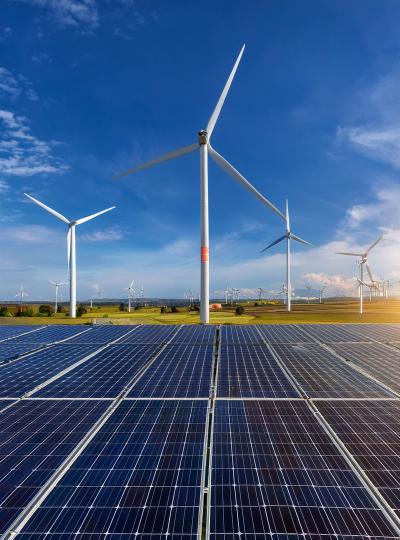
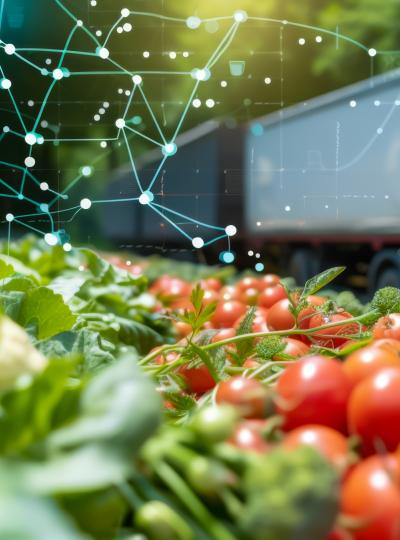
Build and operate small size and modular cold storage units for fruits and vegetable offering space rental services as well as market-related services to farmers, cooperatives or Economic Interest Groups based on a daily, weekly or monthly fees and pay-as-you-go modality. The cold storage infrastructure is powered by solar energy and features technology (IoT) to manage the temperature and storage in real time.
Expected Impact
Build and operate solar cold storage facilities reduces post-harvest losses, increases food producers' incomes and sustainably, improves food security in rural communities and decreases GHG emissions.
How is this information gathered?
Investment opportunities with potential to contribute to sustainable development are based on country-level SDG Investor Maps.
Disclaimer
UNDP, the Private Finance for the SDGs, and their affiliates (collectively “UNDP”) do not seek or solicit investment for programmes, projects, or opportunities described on this site (collectively “Programmes”) or any other Programmes, and nothing on this page should constitute a solicitation for investment. The actors listed on this site are not partners of UNDP, and their inclusion should not be construed as an endorsement or recommendation by UNDP for any relationship or investment.
The descriptions on this page are provided for informational purposes only. Only companies and enterprises that appear under the case study tab have been validated and vetted through UNDP programmes such as the Growth Stage Impact Ventures (GSIV), Business Call to Action (BCtA), or through other UN agencies. Even then, under no circumstances should their appearance on this website be construed as an endorsement for any relationship or investment. UNDP assumes no liability for investment losses directly or indirectly resulting from recommendations made, implied, or inferred by its research. Likewise, UNDP assumes no claim to investment gains directly or indirectly resulting from trading profits, investment management, or advisory fees obtained by following investment recommendations made, implied, or inferred by its research.
Investment involves risk, and all investments should be made with the supervision of a professional investment manager or advisor. The materials on the website are not an offer to sell or a solicitation of an offer to buy any investment, security, or commodity, nor shall any security be offered or sold to any person, in any jurisdiction in which such offer would be unlawful under the securities laws of such jurisdiction.
Country & Regions
- Senegal: Dakar
- Senegal: Nord
- Senegal: Centre
- Senegal: Sud
Sector Classification
Food and Beverage
Development need
Senegal faces low food sovereignty and imported 70% of its food products in 2024. It also faces low food security with 21% of the population being food insecure, in 2023. The sector is also characterized by a low productivity, contributing 15.5% GDP in 2024. Finally, the sector is a significant contributor to GHG emissions but is vulnerable to climate change (1, 2, 3, 4).
Policy priority
The Strategie Nationale de Developpement 2025-2029 aims at increasing the agricultural productivity and fostering its modernization. The Stratégie Nationale de Sécurité Alimentaire et de Résilience 2015-2035 highlights the need for increased and diversified agricultural production as well as the importance of food processing and conservation to enhance food security (5, 6).
Gender inequalities and marginalization issues
Women represent more than half of the country’s labor force in the rural sector and significantly contribute to agricultural production, being highly active in processing and marketing of agricultural, livestock and fishery products. Yet, only 6% of them own agricultural land. For the others, their access to land largely depends on men relatives, who owns the land, affecting their land tenure security. Coastal agricultural communities in Senegal also face heightened climate risks due to sea level rise, flooding, and erosion, adding to broader national vulnerabilities linked to erratic rainfall, rising temperatures, and desertification. Finally, climate change reinforces food insecurity particularly for the poorest households (7, 8, 9, 17).
Investment opportunities introduction
Senegal agricultural sector contributed 15.5% of GDP in 2024. To increase the sector productivity, investments in means and tools of production is key. It is particularly the case in agricultural mechanization, adapted storage and water management for agricultural production (5, 10).
Key bottlenecks introduction
Senegal’s agri-food industry faces climate vulnerability, low processing, poor infrastructure, and low mechanization, as well as weak market access, price volatility and weak regulations. The low access to finance and insurance reinforced farmers vulnerability. Strong dependence on imports and competition also are structural challenges for the sector (11, 12, 13)
Food and Agriculture
Development need
Senegal’s agricultural sector faces low productivity with 30% post-harvest losses and low processing capacity, resulting in productivity 30% below the national average and low added value. Post-harvest loss cost USD 167 million annually. Climate change will affect traditional cash crop production such as ground nuts with decrease in yields between 5-25% (11, 14, 15, 22).
Policy priority
The Strategie Nationale de Souverainete Alimentaire (2024–2028) aims at reducing food imports and ensure self-sufficiency in key food products, such as cereals, key vegetables, eggs and milk production. The Stratégie Nationale d'Industrialisation encourages increased agricultural product processing through the development of infrastructures (12, 16).
Gender inequalities and marginalization issues
Poverty is highly concentrated in rural groundnut production basins—especially Diourbel, Kaolack, and Thiès—which together host about one-third of Senegal’s poor, compounding climate vulnerability for smallholders, including many women. In addition to climate vulnerability (floods, drought and storms), women in the agricultural sector also face significant challenges related to their land tenure rights and their limited access to financing mechanisms, production inputs, and extension services, as well as restricted market access. Finally, climate shocks particularly affects the livelihoods of rural households relying on livestock and agriculture for subsistence (14, 17, 18, 21).
Investment opportunities introduction
Senegal’s Climate Smart Agriculture Plan prioritizes investments in solar irrigation, climate-resilient seeds, storage, and climate services to boost the sector's modernization and resilience. Processing and high-value agricultural and fish products are also key to increasing the sector value added (9, 19, 20).
Key bottlenecks introduction
Limited irrigation, degraded soils, low mechanization, and weak rural infrastructure are major challenges to the agricultural sector productivity, as well as difficulties in feeding and watering livestock, problems related to animal health, access to quality seeds and intrants and the high climate vulnerability, particularly threatening rural livelihoods (12, 13).
Agricultural Products
Pipeline Opportunity
Solar cold storage for fruits and vegetables
Build and operate small size and modular cold storage units for fruits and vegetable offering space rental services as well as market-related services to farmers, cooperatives or Economic Interest Groups based on a daily, weekly or monthly fees and pay-as-you-go modality. The cold storage infrastructure is powered by solar energy and features technology (IoT) to manage the temperature and storage in real time.
Business Case
Market Size and Environment
USD 100 million - USD 1 billion
5% - 10%
The National Agency for Market Regulation (ARM) is looking to expend the cold storage capacity for horticulture products, including onion, by 100,000 tons (31).
Overall, the agricultural sector loses USD 171 millions of income yearly due to high post-harvest loss. Among these, fruits and vegetable represent more than half the loss (30).
In Senegal the cold chain market is estimated at USD 120 million in 2025 (36).
The African cold chain logistics market was estimated at USD 10.88 billion in 2024. The estimated CAGR for the African cold chain logistics market is 8.28% until 2029 (29).
Indicative Return
> 25%
According to stakeholder experience, Gross Profit Margin can exceed 50% profitability, as it rents small modular cold storage units to producers, cooperatives, or economic groups, combined with a market access support platform (36).
Investment Timeframe
Medium Term (5–10 years)
Based on an analysis conducted for the investment in a 30m3 cold storage facility owned and managed by a cooperative, it is expected that the loan will be repaid in 5 years, giving indication on a potential return on investment on the medium term for an investor (28).
Ticket Size
USD 500,000 - USD 1 million
Market Risks & Scale Obstacles
Business - Supply Chain Constraints
Capital - Requires Subsidy
Impact Case
Sustainable Development Need
In Senegal, post-harvest loses affect between 12 and 40% of GDP and amount to about USD 167 million every year, with losses in key productions such as cereals, fruits and vegetables. These losses are partially caused by the lack of cold storage infrastructure and their high costs (11, 34, 35).
In the horticulture sector for instance, post-harvest loss on farm reach 30% in average for vegetables. These represent a loss of income for the farmers and affect the food security of the population (11).
In 2022, the latest available data, rural areas host three fourth of the poor population and in rural areas 53.3% of the population lives in monetary poverty. This rate is even higher for farmers, as it reaches 67.5% among farmer households (37).
Gender & Marginalisation
In 2022, post-harvest losses in Podor (Saint Louis region) exceeded USD 10 million, affecting crops like tomatoes, onions and bananas due to inadequate cold or adapted storage. Out of the 14 storage facilities identified, 8 were not operational (34).
In the agricultural sector, women represent 70% of the workforce, but face more challenges than men in access to land, finance and production means. In addition, they play a key role in marketing of vegetables and perishable products on local markets, and therefore are more impacted by the difficult access to adapted storage. The absence of storage facilities or their high costs forces women to sell immediately after harvest, when prices are the lowest, reducing their revenues and increasing their economic vulnerability (38, 39).
Expected Development Outcome
Solar cold storage contributes to reducing post-harvest losses by addressing one of the most pressing agricultural inefficiencies in Senegal. Reducing post-harvest loss in vegetable production could increase supply by 45% per year, for a value of USD 72 million, and reduce annual vegetable imports by 22% (11).
Solar cold storage improves preservation which enables farmers to sell products at higher prices and year-round, increasing household revenues and supporting food security. In Senegal, a cold storage project with three 20 tons capacity units will enable producers to generate up to EUR 18,000 in additional income annually, an increase of 30% (35).
Solar cold storage ensures a better valorization of agricultural products which helps stabilize markets against seasonal fluctuations, improves local food security and decreases the sector's GHG emissions. For example, in Senegal, onion prices surge by 20% outside the production season. By addressing the issue, a cold storage project with a total capacity of 60 tonnes will enhance food security for 3,000 people and save 1,200 tonnes of CO2 emissions (35).
Gender & Marginalisation
Better access to reliable cold storage facilities can empower women producers and traders to delay sales, obtain better prices, thus, to secure more stable income. Therefore, cold storage supports women economic activities and empowerment (35, 40).
Increasing the cold storage capacity of the region, including through PPP projects, will reduce post-harvest loss and increase revenues from the agricultural sector (34).
Primary SDGs addressed
2.1.2 Prevalence of moderate or severe food insecurity in the population, based on the Food Insecurity Experience Scale (FIES)
In 2023, severe food security affected 4% of the population, and moderate food insecurity 29.4% in Senegal (41).
13.2.2 Total greenhouse gas emissions per year
Carbone dioxide emissions excluding LULUCF were of 0.7 tons per capita in 2023 (10).
Senegal aims at refusing GHG emissions of 7% unconditionally and 29% conditionally by 2030 (4).
1.1.1 Proportion of the population living below the international poverty line by sex, age, employment status and geographic location (urban/rural)
In 2021, the poverty ration with less than USD 3 per day was of 17.9%, with 17.6% for women and 18.2 for men (41).
Secondary SDGs addressed
Directly impacted stakeholders
People
Gender inequality and/or marginalization
Planet
Corporates
Public sector
Indirectly impacted stakeholders
People
Gender inequality and/or marginalization
Planet
Corporates
Public sector
Outcome Risks
High upfront costs may limit adoption by smallholders, increasing inequality if only wealthier producers access cold storage.
Poor maintenance of cold units and solar panels could reduce efficiency, shorten lifespan and limit food preservation benefits.
Dependence on unreliable electricity sources (if not fully solar-powered) could undermine system performance and increase costs.
Oversupply of preserved products at certain times may reduce prices, limiting income gains.
Gender inequality and/or marginalization risk: Without targeted measures, women traders may still face barriers to access cold storage.
Impact Risks
Climate change (heat waves, droughts) may increase cooling demand, raising costs and straining energy systems where solar systems are not enough to meet the demand of the facility.
Limited access to finance and credit can prevent scaling of cold storage in poorer or remote regions.
Weak transport and market infrastructure could reduce the use of cold storage and potential benefits of stored products.
Risk of unequal distribution of units (favoring commercial farms, big agro-industry companies and intermediaries over smallholders) exacerbates inequalities.
Gender inequality and/or marginalization risk: If cold storage ownership remains male-dominated, women producers may benefit less from improved price stability.
Impact Classification
What
Improved post-harvest preservation reducing food loss, increased farmer income, enhanced food security, and lower GHG emissions from organic waste.
Who
Directly benefits farmers, including smallholder, especially women traders in fresh produce value chains; indirectly benefits consumers and rural communities.
Risk
Adoption barriers, maintenance gaps, or unequal access may reduce expected benefits; women may be excluded if not specifically targeted.
Contribution
Brings an innovative, solar-powered storage model addressing food loss, rural poverty, and gender gaps in market access.
How Much
Vegetable supply could increase by 40%, reducing annual vegetable imports by 22%, farmers' incomes can improve by 30%, and GHG emissions ca be reduced by 1,000 tones per project (11, 35).
Impact Thesis
Build and operate solar cold storage facilities reduces post-harvest losses, increases food producers' incomes and sustainably, improves food security in rural communities and decreases GHG emissions.
Enabling Environment
Policy Environment
Strategie Nationale de Developpement 2025-2029: identified a cold storage project as part of the strategic interventions in the Priority Action Plan, in support to the agricultural sector (5).
Strategie Nationale de Souverainete Alimentaire 2024-2028: positions as a priority action the reinforcement of structuring marketing infrastructures such as cold storage (12).
Stratégie nationale de sécurité alimentaire et de résilience 2015-2035: highlights infrastructure as a component of food security, as they enable the stability of supply. It also emphasis on cold storage as a resilience asset (6).
Plan d'Investissement pour une Agriculture Climato-Intelligente: identifies as one of its strategic pillars the improvement of production, conservation and marketing of agricultural products. In that regards, it highlights the adoption of modern and Eco energetic storage as key (19).
Financial Environment
Financial incentives: Cold storage projects can be financed through impact investors such as Teranga capital, or the financing facility to support smart agriculture in face of climate change from La Banque Agricole, financed by the GCF (53, 54).
Financial incentives: La Banque Agricole du Senegal with the support of the European Investment Bank and AFD, opened a new credit line to reinforce the development of sustainable agricultural value chains. It will provide financing to climate projects (43).
Fiscal incentives: The new Investment Code grants VAT suspension and refund (12–24 months), plus tariff exemptions for 3 years in Dakar/Thies and 5 years elsewhere for SME investments over USD 26,600. Strategic agricultural projects may receive additional government-negotiated benefits (44).
Fiscal incentives: Companies established in a Special Economic Zone benefit from duties and tax exemptions on production equipment, VAT suspension on goods and services for production, tax credit of 40% on investments (up to 70% out of Dakar) and tax exemption on agricultural equipment (46).
Regulatory Environment
Loi n° 2004-16 portant loi d’orientation agro-sylvo-pastorale: allows farmers to gather in professional organization, grants famers social protection and states that the Government and local authorities should build infrastructure and provide necessary services in rural areas (45).
Loi n°2021-31 portant Code de l’électricité: authorizes self-production of electricity from renewable resources for industrial purposes (48).
Loi 66/48 du 27 mai 1966, relative au contrôle des produits alimentaires et la répression des fraudes: sets the obligation of control for human consumption products, which can be performed in the storage space for non processed products (49).
Marketplace Participants
Private Sector
Keblink, Agricool, Ifria, SwamAgri, INTERMAQ, NRJsolaire, Sensfrais, Valorem.
Government
National Agency for Market Regulation (ARM), Autonomous Port of Dakar, National Interest Market, Ministry of Agriculture, Food Sovereignty and Livestock, Departmental Service of Commerce, National Agency for Renewable Energies.
Multilaterals
Subnational Climate Fund, AfDB, EIB
Non-Profit
Economic Interest Group, farmers cooperatives
Public-Private Partnership
The Spanish company INTERMAQ 2012 SL is building 20 cold storage in the scope of a PPP.
Target Locations

Senegal: Dakar
Senegal: Nord
Senegal: Centre
Senegal: Sud
References
- (1) WFP. 2024. Plan stratégique de pays – Sénégal (2025-2029). https://executiveboard.wfp.org/document_download/WFP-0000161641#:~:text=Dans%20le%20d%C3%A9partement%20de%20S%C3%A9dhiou,taux%20d%C3%A9passe%2025%20pour%20cent.
- (2) Conseil National de Sécurité Alimentaire. 2023. Statistique sur l'insécurité alimentaire. https://www.secnsa.sn/wp-content/uploads/2023/07/Bulletin-Trimestriel-du-SAP-Mars-Avril-Mai-23-VF.pdf.
- (3) World Bank. Data. https://donnees.banquemondiale.org/indicateur/NV.AGR.TOTL.ZS?locations=SN.
- (4) République du Sénégal. 2020. Contribution Déterminée au Niveau National du Sénégal. https://faolex.fao.org/docs/pdf/sen211288.pdf.
- (5) République du Sénégal. 2024. Agenda National de Transformation, Strategie nationale de Developpement 2025-2029. https://www.economie.gouv.sn/sites/default/files/2025-04/snd.pdf
- (6) Republique du Sénégal. 2015. Stratégie Nationale de Sécurité Alimentaire et de Résilience (SNSAR) 2015-2035. https://www.dapsa.gouv.sn/sites/default/files/publications/SNSAR%20VALIDEE%20AVEC%20PAP%20Version%20Finale-1.pdf.
- (7) World Bank. 2024. Land Rights and Gender Inequality in Senegal, Gender Gap Analysis Part I. https://documents1.worldbank.org/curated/en/099157510302419205/pdf/IDU-b679a79b-5c40-496c-a228-98aef2f6223c.pdf. "8) Global Green Growth institute. 2019. Senegal Social Review. https://gggi.org/wp-content/uploads/2020/01/GGGI_Senegal-Social-Review_December-2019-2.pdf?.com. " "9) World Bank. 2024. Senegal Country Climate and Development Report. https://openknowledge.worldbank.org/entities/publication/a6c43dd1-aa81-4a91-aed2-c3209507077d?com=. "
- (10) World Bank. Data Senegal. https://data.worldbank.org/country/senegal
- (11) CGIAR-AICCRA. 2024. Innovation challenge spark ideas to solve post-harvest losses in Senegal. https://alliancebioversityciat.org/stories/innovation-challenge-spark-ideas-solve-post-harvest-losses-senegal?.com
- (12) Ministère de Agriculture, de l'Equipement Rural et de la Souveraineté Alimentaire, Ministère des Pêches et de l'Economie Maritime, Ministère de l'Elevage et des Productions Animales. 2024. Stratégie Nationale de la Souveraineté Alimentaire (2024-2028). https://ipar.sn/wp-content/uploads/2024/08/STRATEGIE-NATIONALE-DE-SOUVERAINETE-ALIMENTAIRE-2024%E2%80%932028.pdf.
- (13) FAO. 2022. Policies and institutions shaping the business enabling environment of agrifood processors in Senegal, An analytical review of the literature for integrated policy making. https://www.rfilc.org/wp-content/uploads/2022/04/Policies-and-institutions-shaping-the-business-enabling-environment-of-agrifood-processors-in-Senegal.pdf?.com.
- (14) World Bank. 2025. Senegal River Valley Connectivity and Integration Project, Project Information Document (PID). https://documents1.worldbank.org/curated/en/099012125082532918/pdf/P18151911380fb091a4a310606ef124730.pdf?.com.
- (15) Feed the Future, US' Government Global Hunger and Food Security Initiative. 2019. Climate-Smart Agriculture in Senegal. https://cgspace.cgiar.org/server/api/core/bitstreams/abab5903-5cfb-479e-97be-003e57112d35/content.
- (16) Ministère du Développement Industriel et des Petites et Moyennes Industries. 2021. Politique et stratégie d’industrialisation du Sénégal 2021-2035. https://aprosi.sn/fichier%20pdf/D%20211103%20Politique%20et%20strate%CC%81gie%20industrialisation%20-%20version%20de%CC%81finitive%20ok.pdf.
- (17) International Research Institute for Climate and Society. 2021. Climate Impact on Nutrition in Senegal. https://iri.columbia.edu/wp-content/uploads/2021/05/Literature-Review_Climate-Impacts-on-Nutrition-in-Senegal_final_Sd_AG_clean2.pdf.
- (18) World Bank. 2024. Senegal - Economic Update - June 2024 - Seizing the Opportunity. https://documents1.worldbank.org/curated/en/099061024131035071/pdf/P500482184b7e40001a04f1cd9ea436625f.pdf.
- (19) CGIAR-AICCRA. 2024.The CSAIP: A stepping stone towards resilient agriculture in Senegal. https://aiccra.cgiar.org/news/csaip-stepping-stone-towards-resilient-agriculture-senegal
- (20) FAO. 2025. Supporting Responsible Investments in Agriculture and Food Systems (RAI). https://www.fao.org/in-action/responsible-agricultural-investments/news/detail/ru/c/1738350/?.com.
- (21) FAO. 2021. The role of small and medium agrifood enterprises in food systems transformation, The casr of rice processors in Senegal. https://openknowledge.fao.org/server/api/core/bitstreams/81a56c13-2c86-4b64-ac96-545f513bc1fa/content.
- (22) Banque Africaine de Developpement. 2024. Rapport Pays 2024 Senegal: Impulser la transformation du Senegal par la reforme de l'architecture financiere mondiale. https://vcda.afdb.org/en/system/files/report/senegal_final_2024.pdf
- (23) Agence Ecofin. 2025. Agriculture : Keblink fabrique des chambres froides intelligentes au Sénégal. Agriculture : KebLink fabrique des chambres froides intelligentes au Sénégal
- (24) DjeliAfrica. 2025. Keblink : la start-up africaine qui marie agriculture de précision et conservation intelligente. https://djeliafrique.com/keblink-la-start-up-africaine-qui-marie-agriculture-de-precision-et-conservation-intelligente/
- (25) Agence Ecofin. 2025. Sénégal : un investissement de 307 millions $ prévu dans le stockage frigorifique. https://www.agenceecofin.com/actualites-agro/1809-131557-senegal-un-investissement-de-307-millions-prevu-dans-le-stockage-frigorifique
- (26) Seneplus. 2025. Le Stockage Frigorifique pour Reduire les Pertes Agricoles. https://www.seneplus.com/economie/le-stockage-frigorifique-pour-reduire-les-pertes-agricoles
- (27) Ecofin Agency. 2023. U.S. DFC supports Ifria Cold Chain Development Company in Morocco and Senegal with $20mln. https://www.ecofinagency.com/finance/1310-44949-u-s-dfc-supports-ifria-cold-chain-development-company-in-morocco-and-senegal-with-20mln
- (28) Lixcap. 2023. Etude d'impact environemental et social pour la societe Ifria : Entreposage frogorifique. https://www.google.com/url?sa=t&rct=j&q=&esrc=s&source=web&cd=&cad=rja&uact=8&ved=2ahUKEwiRnLr_k5SQAxWKBdsEHco7AX4QFnoECAsQAQ&url=https%3A%2F%2Fd1xeoqaoqyzc9p.cloudfront.net%2Fapp%2Fuploads%2F2023%2F04%2F20230331.Ifria_.ESIA_.Study_.DMO_FR.pdf&usg=AOvVaw1SGHKCIc1IYyFtdn0in3F4&opi=89978449
- (29) Global Cold Chain Alliance. 2025. The Cold Chain in Africa. https://www.gcca.org/magazine-article/the-cold-chain-in-africa/
- (30) Agence Ecofin. 2025. Le Sénégal veut augmenter sa capacité de stockage des récoltes de 250 000 tonnes. https://www.agenceecofin.com/actualites-agro/1405-128329-le-senegal-veut-augmenter-sa-capacite-de-stockage-des-recoltes-de-250-000-tonnes#:~:text=Selon%20les%20estimations%20du%20Groupe,%24)%20par%20an%20au%20S%C3%A9n%C3%A9gal
- (31) Agence Ecofin. 2025. Le Sénégal discute avec un groupe chinois pour renforcer sa chaîne de froid. https://www.agenceecofin.com/actualites-agro/1807-130200-le-senegal-discute-avec-un-groupe-chinois-pour-renforcer-sa-chaine-de-froid
- (32) GIZ & SOSEPAC. 2019. Etude Economique d'Identification de Secteur et de Beneficiaires Potentiels d'un Projet de Chambre Froide Solaire. https://energypedia.info/images/5/57/Dossier_de_faisabilit%C3%A9_Etude_de_faisabilit%C3%A9_sur_les_chambres_froides_Solaires_SOSEPAC.pdf
- (33) GIZ. 2020. Sénégal : Programme Energies Durables (PED), Conservation Agricole : Chambres Froides Solaires dédiées aux produits maraichers. https://energypedia.info/images/1/13/PED_GIZ_FS_chambre_froide_GCIT.pdf
- (34) Initiative Prospective Agricole et Rurale. 2024. Etude sur les pertes post-récoltes et les besoins en infrastructures de stockage et de conservation des produits agro-sylvo-pastoraux et halieutiques de la commune de Fanaye et du reste du département de Podor. https://ipar.sn/wp-content/uploads/2025/03/Rapport-sur-les-pertes-post-recoltes-et-les-besoins-en-stockage_Podor_IPAR_version-finale-VF.pdf
- (35) LuxAid. 2024. Transformer la chaîne alimentaire du froid avec l’énergie verte au Sahel. https://www.luxaidbusiness4impact.lu/fr/actualite/transformer-la-chaine-alimentaire-du-froid-avec-lenergie-verte-au-sahel/
- (36) Stakeholder consultation hold in November 2025.
- (37) Ministere de l’Economie, du Plan et de la Cooperation & ANSD. 2024. Enquete Harmonisee sur les Conditions de Vie des Menages (EHCVM II) au Senegal. https://www.ansd.sn/sites/default/files/2024-07/Rapport_Final_EHCVM_2021-2022_VF.pdf
- (38) UE & DAI. 2021. Profil Genre Sénégal, Rapport 2021. https://www.eeas.europa.eu/sites/default/files/profil_pays_genre_senegal_ue_2021.pdf
- (39) ONU Femmes. 2016. Autonomisation des femmes grace a une agriculture resiliente face aux changements climatiques. https://www.google.com/url?sa=t&rct=j&q=&esrc=s&source=web&cd=&cad=rja&uact=8&ved=2ahUKEwiG1o2f5JGQAxXHSfEDHR2dLU0QFnoECCAQAQ&url=https%3A%2F%2Ftrainingcentre.unwomen.org%2Fpluginfile.php%2F66830%2Fmod_folder%2Fcontent%2F0%2FAutonomisation%2520des%2520femmes%2520gr%25C3%25A2ce%2520%25C3%25A0%2520une%2520agriculture%2520r%25C3%25A9siliente%2520face%2520aux%2520changements%2520climatiques%2520%2528S%25C3%25A9n%25C3%25A9gal%2529.pdf%3Fforcedownload%3D1&usg=AOvVaw3ymdhuQotBpdgwuewFTDO7&opi=89978449
- (40) PNUD Burkina Faso. 2023. Des chambres froides solaires du PNUD boostent la résilience des femmes, Utilisation productive de l’énergie durable au Burkina. https://www.undp.org/fr/burkina-faso/blog/des-chambres-froides-solaires-du-pnud-boostent-la-resilience-des-femmes
- (41) UN Department of Economics and Social Affairs. Statistics, SDG Indicators Database, Senegal. https://unstats.un.org/sdgs/dataportal/database
- (42) ANSD. 2021. Coûts et revenus agricoles des ménages selon la région et le type de producteur. https://senegal.opendataforafrica.org/vcyahhb/co%C3%BBts-et-revenus-agricoles-des-m%C3%A9nages-selon-la-r%C3%A9gion-et-le-type-de-producteur?region=SENEGAL
- (43) BEI. 2024. Sénégal : la Banque Agricole et la BEI, avec le soutien de l’UE signent un accord pour appuyer la souveraineté alimentaire du Sénégal. https://www.eib.org/fr/press/all/2024-321-la-banque-agricole-et-la-bei-avec-le-soutien-de-l-ue-signent-un-accord-pour-appuyer-la-souverainete-alimentaire-du-senegal
- (44) République du Sénégal. 2025. Code des Investissements. https://www.finances.gouv.sn/app/uploads/Code-des-Investissements.pdf
- (45) Republique du Senegal. 2023. Loi d’orientation agro-sylvo-pastorale. https://faolex.fao.org/docs/pdf/sen44795.pdf
- (46) APIX. 2025. Investor's guide to Senegal. https://investinsenegal.sn/
- (47) Agropole Website. https://agropole.sn/
- (48) Republique du Senegal. 2022. loi portant code de l’electricite. Loi-n°2021-31-du-9-juillet-2021-portant-Code-de-lElectricite.pdf
- (49) République du Sénégal. Loi 66/48 du 27 mai 1966, relative au contrôle des produits alimentaires et la répression des fraudes. https://faolex.fao.org/docs/pdf/Sen174045.pdf
- (50) Agri Digitale. 2025. Le Sénégal renforce le stockage en pomme de terre et oignons. https://www.agridigitale.net/article/le-senegal-renforce-le-stockage-en-pomme-de-terre-et-oignons
- (51) Dakaractu. 2025. Mbane : SWAMI AGRI inaugure sa 8e chambre froide, estimée à près de 4,5 milliards de FCFA, portant la capacité de conservation à 105 000 tonnes. https://www.dakaractu.com/Mbane-SWAMI-AGRI-inaugure-sa-8e-chambre-froide-estimee-a-pres-de-45-milliards-de-FCFA-portant-la-capacite-de_a259563.html
- (52) République de Sénégal, Ministere d'Agriculture. 2025. Programme national de construction de 18 500 tonnes de hangars frigorifiques : Pose de la première pierre à Tassette, une étape décisive vers la souveraineté alimentaire. https://agriculture.gouv.sn/programme-national-de-construction-de-18-500-tonnes-de-hangars-frigorifiques-pose-de-la-premiere-pierre-a-tassette-une-etape-decisive-vers-la-souverainete-alimentaire/
- (53) La Banque Agricole. 2025. Facilité de financement vert pour la promotion de l'agriculture intelligente face au climat au Sénégal. https://www.labanqueagricole.sn/sites/default/files/2025-01/Cadre%20de%20Gestion%20Environnementale%20et%20Sociale_VSF12012025.pdf
- (54) Teranga Capital. Senfrais. https://www.terangacapital.com/portefeuille/senfrais/