








Solar power plant with battery storage system
Business Model Description
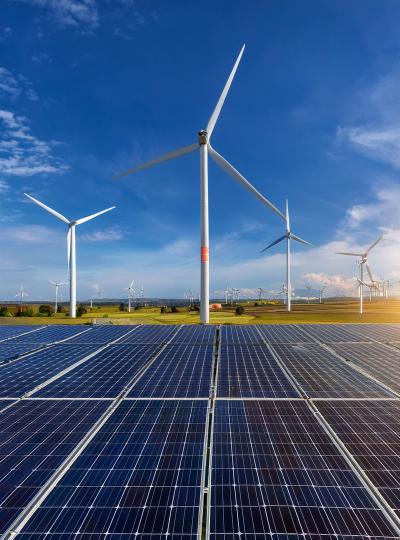
Built, operate and maintain solar PV panel power plant with a battery storage system to ensure a continuous energy production. Revenues will be drawn from the sale of the produced electricity to SENELEC, managing the national grid, according to the price agreed in a power-purchase-agreement.
Expected Impact
Investment in solar power plant and battery storage enhances accesses to clean and stable energy, reduces the sector's GHG emissions, lowers fossil fuel dependency, reduces the costs of production and the country's vulnerability to external shocks.
How is this information gathered?
Investment opportunities with potential to contribute to sustainable development are based on country-level SDG Investor Maps.
Disclaimer
UNDP, the Private Finance for the SDGs, and their affiliates (collectively “UNDP”) do not seek or solicit investment for programmes, projects, or opportunities described on this site (collectively “Programmes”) or any other Programmes, and nothing on this page should constitute a solicitation for investment. The actors listed on this site are not partners of UNDP, and their inclusion should not be construed as an endorsement or recommendation by UNDP for any relationship or investment.
The descriptions on this page are provided for informational purposes only. Only companies and enterprises that appear under the case study tab have been validated and vetted through UNDP programmes such as the Growth Stage Impact Ventures (GSIV), Business Call to Action (BCtA), or through other UN agencies. Even then, under no circumstances should their appearance on this website be construed as an endorsement for any relationship or investment. UNDP assumes no liability for investment losses directly or indirectly resulting from recommendations made, implied, or inferred by its research. Likewise, UNDP assumes no claim to investment gains directly or indirectly resulting from trading profits, investment management, or advisory fees obtained by following investment recommendations made, implied, or inferred by its research.
Investment involves risk, and all investments should be made with the supervision of a professional investment manager or advisor. The materials on the website are not an offer to sell or a solicitation of an offer to buy any investment, security, or commodity, nor shall any security be offered or sold to any person, in any jurisdiction in which such offer would be unlawful under the securities laws of such jurisdiction.
Country & Regions
- Senegal: Dakar
- Senegal: Nord
- Senegal: Centre
- Senegal: Sud
Sector Classification
Renewable Resources and Alternative Energy
Development need
Senegal has achieved a national electricity access rate of 84% in 2023, yet rural electrification lags at 64% and over 30% of rural communities remain off-grid. Despite recent progress in power generation, over 60% of the population continues to rely on unsustainable cooking methods, such as firewood or charcoal causing health risks (1, 2).
Policy priority
The National Development Strategy 2025-2029 aims at achieving universal access to electricity, enhanced energy efficiency and demand management. The Strategie Gas to Power 2018-2025 targets the energy independence and the reduction of energy costs. The Nationally Determined Contribution's objective is to reduce the sector's emission of 35,3% unconditionally by 2030 (3, 4, 5).
Gender inequalities and marginalization issues
Stark disparities remain between electrification of rural and urban areas. Electricity access in urban center is of 97% compared to 64% in rural areas. This rural energy gap disproportionately affects women and youth who leave in majority in rural areas. Women also spend excessive hours on survival tasks such as fetching water or firewood and processing food manually. These unpaid burdens severely limit their time for education, income-generating activities, and childcare (1, 6, 7).
Investment opportunities introduction
Per capita energy consumption in Senegal increased of 301% from 2000 to 2023, reaching 0.417 MWh/capita. Opportunities include scaling renewables, transitioning from HFO to natural gas, grid upgrade, and transport and distribution. With existing reserves, developing the gas value chain is crucial to lowering costs and boosting industrial growth (4, 8, 9).
Key bottlenecks introduction
Despite strong energy potential, Senegal struggles with high electricity costs, sparse rural access, reliance on foreign investments for structuring renewable projects, limited support for local small-scale renewables, and risks from new fossil fuel reserves that might divert attention from renewables development (3, 10).
Alternative Energy
Development need
Senegal remains highly dependent on fossil fuel, making the sector one of the biggest contributor to GHG emissions. Emissions are planned to increase by 22% from 2025 to 2030 following a business as usual scenario. The country needs to harness its solar and wind potential to reach its energy transition and universal electrification target by 2029 (3, 5, 11, 12, 13).
Policy priority
The National Development Strategy 2025-2029 targets a share of renewable of at least 40% by 2029. The Stratégie nationale des combustibles de cuisson propre et des bio carburants 2025-2035 set the pace for a clean cooking transition, through a diversified and accessible clean energy supply (3, 14).
Gender inequalities and marginalization issues
Only a small portion of rural Senegalese households have access to clean cooking fuels (LPG, biogas), leaving rural women particularly burdened with traditional biomass use—which drives health issues, time poverty, and limited economic opportunities. In addition, inequal access to electricity throughout the territory reinforces economical inequalities, with a strong correlation between access to electricity and poverty peaking in rural areas (11, 15).
Investment opportunities introduction
Senegal targets 40% renewables by 2030 and full electrification by 2029, with untapped theoretical solar PV irradiation potential averaging 5,798 kWh/m²/day and offshore wind capacity estimated at 45 GW—13 GW fixed and 32 GW floating (3, 11).
Key bottlenecks introduction
Despite strong solar and wind potential, Senegal faces several renewable-specific challenges such as high financing costs, weak storage capacity, grid congestion, slow regulatory implementation, limited technical competencies, and heavy reliance on imported equipment and materials (3, 16, 17, 18).
Solar Technology and Project Developers
Pipeline Opportunity
Solar power plant with battery storage system
Built, operate and maintain solar PV panel power plant with a battery storage system to ensure a continuous energy production. Revenues will be drawn from the sale of the produced electricity to SENELEC, managing the national grid, according to the price agreed in a power-purchase-agreement.
Business Case
Market Size and Environment
5% - 10%
In 2023, 25.8% of the Senegalese population did not have access to electricity (24).
In 2023, 43.5% in rural areas did not have access to electricity (25).
The electricity production sector's revenues increased driven by a 3.5% surge in sales in 2025 (26).
Electricity, gas and water production sector revenues increased 4.8% in 2025 year-on-year (26).
Indicative Return
5% - 10%
According to consultations with a DFIs, the ROI for solar power plants is lower than 10% (27).
Investment Timeframe
Long Term (10+ years)
Investment from Proparco in the photovoltaic solar plant Senergy was over 18 years to finance the exploitation of the plant (28).
Ticket Size
> USD 10 million
Market Risks & Scale Obstacles
Capital - CapEx Intensive
Market - Highly Regulated
Impact Case
Sustainable Development Need
The country's heavy dependence on fossil fuels creates high production costs and exposes Senegal to global price volatility. Around 70% of the national energy capacity installed is powered by coal and heavy fuel oi. In 2023, 59% of the total national energy supply was sourced from oil. The energy sector represented more than 50% of Senegal's GHG emissions in 2023 (8, 11, 13).
National electricity demand is projected to grow by 80% between 2024 and 2029. Despite a significant solar energy potential, only 27.35% of the public electricity production originated from renewable resources. Senegal benefits from one of the highest solar irradiation levels in the world, over 5.7 kWh/m²/day. In addition, the country also possesses strong wind potential along its coastal zones, particularly near Dakar and Saint-Louis, where average wind speeds reach 6–7 m/s (11, 31).
Despite a high national electrification rate at 84% significant disparities remain between urban and rural areas. More than 30% of rural communities remain unconnected to the grid (32).
Gender & Marginalisation
Electricity access is concentrated in urban areas. The wealthiest households have a network access rate of 96.9%. In contrast, the poorest households have the lowest rate, with only 49.9% of households having access to electricity (33).
Women and children are disproportionately affected by reliance on biomass/kerosene, leading to health risks and time burdens. Over 237.000 deaths among children under 5 years old are due to respiratory infections, caused by household air pollution (34).
The region of Tambacounda, Kédougou, Kolda and Matam are presenting the lowest access to electricity rates, with an access rate of around 55%, compared to 84% nationally (32, 33).
Expected Development Outcome
Solar power plants reduce the energy sector GHG emissions, contributing to the national targets of 10% reduction in the sector's emissions by 2030 and of 40% of renewables in the energy mix by 2029. For example, the Bokhol plant prevents 23,000 tonnes of CO2 to be released per year (5, 23).
Senegal has considerable potential in solar and wind energy. These renewable resources provides the least-cost option to meet growing electricity demand while supporting decarbonization efforts. Investments in solar power plants enhance energy security, reduce reliance on fossil fuels and create opportunities for local employment and productive uses of electricity in nearby communities (13, 35).
Senegal currently spends over 4.2% of GDP on fuel imports and energy subsidies as of September 2023. Switching to renewables helps reduce dependence on volatile fuel imports and subsidy burdens, delivering cost savings for households (36).
Gender & Marginalisation
Investment in solar power plants enhances national energy security and reduces dependence on imported fossil fuels, lowering electricity costs over time, broadening access to poorer households. Construction and maintenance phases create local employment opportunities, including for youth and women (35, 37).
Affordable and reliable solar energy lowers production costs and enables women and youth particularly in peri-urban areas, to start small businesses, use electric tools for processing and services and therefore access new income opportunities. Also, reduced use of biomass and kerosene improves indoor air quality and health for women and children. In rural regions of Senegal, where reliance on traditional fuels remains high, these benefits are especially significant for marginalized households (38, 39, 40).
Primary SDGs addressed
7.1.1 Proportion of population with access to electricity
7.2.1 Renewable energy share in the total final energy consumption
Senegal's nationwide electricity access rate is 84%, with 98.5% in Dakar, 92.2% in other urban areas and 66.6% in rural areas (33).
In 2022, 14.3% of Senegal's energy consumption comes from renewable energy sources (8).
Senegal aims to achieve universal energy access by 2029 (3).
Government of Senegal target is to increase the share of renewable energy to 40% of the energy mix by 2030 and 36.1% by 2029 (3).
13.2.2 Total greenhouse gas emissions per year
Carbone dioxide emissions excluding LULUCF were of 0.7 tons per capita in 2023 (41).
Senegal targets 7% reduction in GHG emissions unconditionally and 29% conditionally by 2030 (3).
Secondary SDGs addressed
Directly impacted stakeholders
People
Gender inequality and/or marginalization
Planet
Corporates
Public sector
Indirectly impacted stakeholders
People
Gender inequality and/or marginalization
Corporates
Public sector
Outcome Risks
Potential negative impacts on local ecosystems or biodiversity might arise during the construction and operation of solar plants.
Conflicts might arise if land acquisition for solar plants affects local communities, including displacement or disputes over land use.
If electricity costs remain high, investments in solar power plant will cause issues of affordability for poor households.
Gender inequality and/or marginalization risk: Women and youth in peri-urban areas may not equally benefit from access to clean energy due to limited access to financing.
Impact Risks
Grid instability or insufficient transmission infrastructure may limit electricity distribution to consumers. Similarly, if no grid extension is planned in parallel with the project, underserved areas will not be reached, reducing the anticipated impact.
Insufficient financing during the construction phase could delay the completion of solar plants and postpone the start of operations, reducing the expected development impact.
Dependence on imported solar panels and batteries as well as lack of local qualified workforce for the maintenance may create supply chain vulnerabilities and increase production costs.
Technical risks linked to solar panels and battery storage and their maintenance might undermine the electricity production and increase costs, therefore reducing the impact.
Gender inequality and/or marginalization risk: Risk of marginalization if women and vulnerable groups are excluded from energy planning and electricity prices remain high.
Impact Classification
What
Enhanced access to clean energy, reduced emissions from the sector and lower costs of production.
Who
Urban, peri-urban households, businesses, SMEs, women and public services.
Risk
Success depends on investment in grid extension and consideration for inclusive access.
Contribution
Solar power plant increases the renewable energy production capacity aligned with Senegal’s 40% renewable target by 2029 (3).
How Much
Solar power plants can cut CO2 by 23,000 tonnes yearly per project (23).
Impact Thesis
Investment in solar power plant and battery storage enhances accesses to clean and stable energy, reduces the sector's GHG emissions, lowers fossil fuel dependency, reduces the costs of production and the country's vulnerability to external shocks.
Enabling Environment
Policy Environment
Stratégie Nationale de Développement 2024-2029: prioritize the development of renewable energy sources, to reach 40% minimum by 2030, including by enhancing solar energy (3).
Lettre de Politique de Développement du Secteur de l'Energie et des Mines 2025-2029: aims achieving universal access to quality, competitive and sustainable energy, and the energetic sovereignty. It directly promotes the development of renewable energies (31).
Nationally Determined Contribution 2021: targets a reduction of 10% of the energy sector's GHG emissions by 2030. Identified solutions to achieve the target are renewable energy scale up, including solar for a total capacity of 235 MW (5).
Projet d’Appui au Programme d’Urgence de Développement Communautaire: aims at increase the population access to basic infrastructure, including energy. It plans the rural electrification of 325 villages through grid connection or solar energy (7).
Just Energy Transition Partnership: will mobilize EUR 2.5 billion to accelerate the development of renewables and will support the establishment of a more conductive regulatory framework (45).
Financial Environment
Financial incentives: EAIF (Emerging Africa & Asia Infrastructure Fund) provides long-term commercial loans for infrastructure projects in Africa, including solar PV and offers financing between USD 10 - 65 million, typically up to 15 years and if required up to 20 years (49, 50).
Financial incentives: Proparco supports private renewable energy projects through long-term loans ranging from EUR 3 - 100 million with maturities of up to around 20 years. African Development Bank (AfDB) also provides financial incentives through instruments such as the Sustainable Energy Fund for Africa (SEFA), which delivers catalytic concessional financing, risk-mitigation tools and early-stage project preparation support to investments in renewable energy across Africa (51, 52).
Financial incentives: Financing opportunities exist with the FONSIS through infrastructure project preparation financing and minority participation (private equity). It invested in the Ten Merina, Kaél and Kahone solar plants (47).
Fiscal incentives: The new Investment Code grants VAT suspension and refund (12–24 months), plus tariff exemptions for 3 years in Dakar/Thies and 5 years elsewhere for SME investments over USD 26,600. Strategic energy projects may receive additional government-negotiated benefits (46).
Other incentives: The Government launched a programme with the World Bank to set up African Centers of Excellence to train youth in science, technology, engineering, and mathematics at different levels of the higher education system. Similarly the GIZ also supported with the Higher Education Program for Renewable Energy and Energy Efficiency to develop skills in the sector (45).
Regulatory Environment
Loi n° 2010-21 portant loi d’orientation sur les énergies renouvelables: establishes the legal framework for renewable energy in Senegal. It allows self-consumption, and sets conditions for grid access and energy sales. It includes provisions for fiscal incentives (42).
Loi n° 2021-31 du 09 juillet 2021 portant Code de l’Electricité: sets that independant producers must obtain a license based on tenders. It also grants the right for producers to access the public transport and distribution network (43).
Loi n° 2023-15 du 02 août 2023 portant Code de l'Environnement: requires an Environmental and Social Impact Assessment for classified project and sets an obligation for the producer to manage the treatment of the products throughout its life cycle (44).
Marketplace Participants
Private Sector
Omexom (VINCI Energies), Africa REN, Engie, Meridiam, InnoVent, Axian Energy, CNTIC, Voltalia-Entech
Government
National Agency for Renewable Energies, Ministry of Energy Oil and Mining, Ministry of Urban Planning, Local Authorities, and Territorial Development, Ministry of Environment and Ecological Transition, local authorities.
Multilaterals
EIB, IFC, Emerging Africa Infrastructure Fund, Emerging Africa and Asia Infrastructure Fund, AfDB, Proparco, FMO, KfW DEG
Non-Profit
Rockefeller Foundation
Public-Private Partnership
The NEA Kolda project is developed under a Engineering, Procurement, and Construction (EPC) contract (48).
Target Locations

Senegal: Dakar
Senegal: Nord
Senegal: Centre
Senegal: Sud
References
- (1) Africa Development Bank Group. 2025. Senegal Energy Fact Sheet. https://www.afdb.org/en/mission-300-africa-energy-summit/accelerating-africas-energy-transition/senegal-energy-fact-sheet?.com
- (2) World Bank. 2025. Senegal closing on universal electricity access. https://www.worldbank.org/en/news/feature/2025/01/21/senegal-closing-on-universal-electricity-access.
- (3) République du Sénégal. 2024. Stratégie Nationale de Développement 2025-2029. https://www.economie.gouv.sn/sites/default/files/2025-04/snd.pdf.
- (4) Ministère du Pétrole et des Energies. 2018. Strategie Gas to Power 2018-2025, Note Synthetique. https://sunupetrole.com/wp-content/uploads/2020/09/note_synthetique_strategie_gas_to_power.pdf.
- (5) République du Sénégal. 2020. Contribution Déterminée au Niveau National du Sénégal. https://faolex.fao.org/docs/pdf/sen211288.pdf.
- (6) Fondation Prince Albert II de Monaco. 2020. EGALES – Gender Equality and Access to Electricity in Senegal. https://www.fpa2.org/en/projets/egales-gender-equality-and-access-to-electricity-in-senegal-00563?.com.
- (7) Ministère du Développement communautaire, de la Solidarité nationale et de l'Équité territoriale. Programme d'Urgence de Developpement Communautaire. undp-sn-xelu62e9.pdf.
- (8) IEA. Senegal Country Profile. https://www.iea.org/countries/senegal/electricity.
- (9) Energy for Growth. 2021. La deuxième vague de la transition énergétique auSénégal : Du HFO aux énergies renouvelables à un système hybride gaz-énergie renouvelable. https://energyforgrowth.org/wp-content/uploads/2021/07/La-deuxie%CC%80me-vague-de-la-transition-e%CC%81nerge%CC%81tique-au-Se%CC%81ne%CC%81gal_vf-FR2-nc-1-2.pdf
- (10) Energy Research and Social Science. 2022. Renewable energy transition in Senegal? Exploring the dynamics of emerging paths to a sustainable energy system. https://www.sciencedirect.com/science/article/pii/S2214629622002742
- (11) IEA. 2023. Senegal 2023, Energy Policy Review. https://iea.blob.core.windows.net/assets/b80ed5fc-7483-4b65-ae73-d39d5b2de40d/Senegal2023.pdf?.com.
- (12) Heinrich Boll Stiftung. 2023. Pour une Transition Energetique Equitable : Le Partenariat JETP au Sénégal - Explications, défis et pistes d’actions. https://sn.boell.org/sites/default/files/2023-08/note-politique-jetp_vf.pdf.
- (13) Banque Mondiale. 2024. Rapport National sur le Climat et le Developpement. https://documents1.worldbank.org/curated/en/099110524125537162/pdf/P1809431e4478806f1bec11d44ad48ab8e9.pdf
- (14) Ministère de l'Energie, du Pétrol et des Mines. 2025. Stratégie nationale des combustibles de cuisson propre et des biocarburants 2025-2035. https://energie-mines.gouv.sn/wp-content/uploads/2025/06/document-de-synthe%CC%80se-de-la-strate%CC%81gie-CD-_vrf.pdf
- (15) Africa Energy Summit. 2025. Paste National pour l'Energie de la République du Sénégal. https://thedocs.worldbank.org/en/doc/852a120aa85ab5eea4c1d3a176ff84ac-0010012025/original/M300-AES-Compact-Senegal.pdf.
- (16) Gas Outlook. 2024. Senegal well-positioned to achieve energy transition: report. https://gasoutlook.com/analysis/senegal-well-positioned-to-achieve-energy-transition-report/.
- (17) Ministry of Foreign Affairs form the Netherlands. 2022. Scoping study Renewable Energy Senegal. https://www.rvo.nl/sites/default/files/2022/02/Scoping-study-Renewable-Energy-Senegal.pdf?utm_source=chatgpt.com.
- (18) International Energy Agency. 2025. How a high cost of capital is holding back energy development in Kenya and Senegal. https://www.iea.org/commentaries/how-a-high-cost-of-capital-is-holding-back-energy-development-in-kenya-and-senegal?.com.
- (19) AEP. 2023. Batteries for the first Senegal ancillary services project. https://africa-energy-portal.org/news/batteries-first-senegal-ancillary-services-project
- (20) Seed Capital Assistance Facility. 2024. Walo Storage Project by Africa REN has commenced construction. https://scaf-energy.org/walo-storage-project-by-africa-ren-has-commenced-construction/
- (21) IFC. 2021. PPP Stories - Scaling Solar - Senegal. https://www.ifc.org/content/dam/ifc/doc/2021/2021-senegal-scaling-solar-ppp-brief.pdf
- (22) IFC. 2020. Lancement de la construction de deux projets Scaling Solar au Sénégal avec le soutien d’IFC. https://www.ifc.org/fr/pressroom/2019/17660
- (23) The Agility Effect. 2017. 75,000 solar panels to light up Senegal. https://www.theagilityeffect.com/en/article/75000-solar-panels-light-senegal/
- (24) World Bank. Access to electricity (% of population) - Senegal. https://data.worldbank.org/indicator/EG.ELC.ACCS.ZS?locations=SN
- (25) World Bank. Access to electricity, rural (% of rural population) - Senegal. https://data.worldbank.org/indicator/EG.ELC.ACCS.RU.ZS?locations=SN
- (26) ANSD. 2025. Indice du chiffre d’affaires dans l’industrie. https://www.ansd.sn/sites/default/files/2025-09/ICA%20industrie%20T2%202025.pdf
- (27) Stakeholder consultations conducted in September and October 2025. "28) Proparco. 2017. Senergy, la plus grande centrale solaire du Sénégal / Immersion 360° PROPARCO. https://www.proparco.fr/fr/ressources/senergy-la-plus-grande-centrale-solaire-du-senegal-immersion-360deg-proparco "
- (29) FMO. 2023. Walo Storage S.A.S.U. https://www.fmo.nl/project-detail/62484
- (30) FMO. 2024. New Energy Africa Kolda S.A. https://www.fmo.nl/project-detail/63495
- (31) Ministère de l'Energie, du Pétrole et des Mines. 2025. Lettre de Politique de Développement du Secteur de l’Energie et des Mines 2025-2029. https://energie-mines.gouv.sn/wp-content/uploads/2025/07/LPDSEM-2025-2029-_VF_Print.pdf
- (32) Banque Mondiale. 2025. Sénégal : renforcement de l'accès universel à l'électricité. https://www.banquemondiale.org/fr/news/feature/2025/01/21/senegal-closing-on-universal-electricity-access
- (33) ANSD. 2024. Enquête Harmonisée sur les Conditions de Vie des Menages (EHCVM II) au Sénégal, Rapport Final. https://www.ansd.sn/sites/default/files/2024-07/Rapport_Final_EHCVM_2021-2022_VF_0.pdf
- (34) WHO. 2024. Household air pollution. https://www.who.int/news-room/fact-sheets/detail/household-air-pollution-and-health#:~:text=Household%20air%20pollution%20was%20responsible,6.7%20million%20premature%20deaths%20annually.
- (35) IFC. 2023. Scaling Solar : déployer l’énergie solaire à grande échelle en Afrique. https://www.ifc.org/content/dam/ifc/doc/2023-delta/infra-factsheet-scaling-solar-french-2023.pdf
- (36) World Bank. 2024. Senegal Economic Update. https://documents1.worldbank.org/curated/en/099061024131035071/pdf/P500482184b7e40001a04f1cd9ea436625f.pdf?_gl=1*fvxgsb*_gcl_au*MTIwMDMwOTUyMC4xNzIzNzI4NjU4
- (37) IFC. 2023. Solar Snapshots. https://www.ifc.org/en/stories/2023/solar-snapshots
- (38) UNDP. 2022. Sustainable Energy For the Sahel - Energy4Sahel. https://www.undp.org/sites/g/files/zskgke326/files/2022-10/Energy4Sahel_Prodoc.pdf
- (39) BMZ. 2024. Improved cooking technologies help protect the climate. https://www.bmz.de/en/issues/climate-change-and-development/climate-financing/example-kenya-senegal-79816
- (40) ASER. 2018. Électrification rurale du Sénégal SE4ALL.. https://gestoenergy.com/wp-content/uploads/2019/04/Gesto_Senegal_FR.pdf
- (41) World Bank. Data Senegal. https://data.worldbank.org/country/senegal
- (42) République du Sénégal. 2010. Loi n° 2010-21 portant loi d’orientation sur les énergies renouvelables. recueil_codes_electricite_senegal.pdf
- (43) République du Sénégal. 2022. Loi portant Code de l’electricité. https://www.energie.gouv.sn/wp-content/uploads/2022/08/Loi-n%C2%B02021-31-du-9-juillet-2021-portant-Code-de-lElectricite.pdf
- (44) République du Sénégal. 2023. Loi portant Code de l’Environnement. https://primature.sn/sites/default/files/2023-10/Loi%20n%C2%B02023-15%20du%2002%20ao%C3%BBt%202023%20portant%20Code%20de%20l%27Environnement.pdf
- (45) African Development Bank Group. 2024. Harnessing the sun: A roadmap for solar manufacturing in the Sahel. https://www.afdb.org/sites/default/files/documents/publications/web_solar_manufacturing_potential_in_sahelian_countries.pdf
- (46) République du Sénégal. 2025. Code des Investissements. https://www.finances.gouv.sn/app/uploads/Code-des-Investissements.pdf
- (47) Fonsis Website. https://www.fonsis.org/fr/eau-energie/
- (48) AEP. 2025. Axian, Voltalia, and Entech Partner on Landmark Solar-BESS Project in Senegal. https://africa-energy-portal.org/news/axian-voltalia-and-entech-partner-landmark-solar-bess-project-senegal
- (49) EAIF. EAIF commits €11.5 million to West Africa’s first project-financed solar PV and battery energy storage system project in Senegal. https://www.eaif.com/eaif-commits-eur11-5-million-to-west-africas-first-project-financed-solar-pv-battery-energy-storage-system-project-in-senegal/
- (50) EAIF website. https://www.eaif.com/who-we-are/
- (51) GET Invest. 2025. Proparco – Debt Facility. https://www.get-invest.eu/fund/proparco-debt-facility/
- (52) AfDB. Sustainable Energy Fund for Africa. https://www.afdb.org/en/topics-and-sectors/initiatives-partnerships/sustainable-energy-fund-for-africa